MSI Titan GT77 HX review: Intel’s most powerful laptop chip, tested

MSI Titan GT77 HX review: Intel’s most powerful laptop chip, tested

Okay, now this is just ridiculous.

For those of you just tuning in, Intel announced an absolutely monstrous mobile processor back in January — the Core i9-13980HX with 5.6Ghz of turbo frequency, 157 watts of maximum turbo power, and 24 cores (eight performance, 16 efficiency). It is, on paper, the most powerful laptop CPU in history. So, naturally, I had to get my hands on one.

I’m writing this to you live from the MSI Titan GT77 HX. This is an absurd device. It’s got a 17.3 inch 144Hz Mini LED screen. Inside are a GeForce RTX 4090, 2TB of storage, and 64GB of memory. If anything can display Intel’s flagship processor at its finest, it’ll be this gigantic thing. Micro Center currently has it listed for, you know, just $4,699.99, a very reasonable and normal price to pay for a computer.

But let me tell you — I deeply envy the 11 people who are going to buy this because the chip inside it is an absolute beast. And here’s what’s most surprising: The battery life, while not what I would call “good,” was better than I expected it to be.

How we rate and review products

Benchmark results

These are some of the best gaming results you’ll see from any laptop. In particular, I want to draw your attention to that CS:GO score. CS:GO score is a particularly CPU-heavy title, and this laptop scored higher than I’ve ever seen a laptop score on that before by a solid margin. I mean, 574 frames per second is just hilarious.

The MSI Titan GT77 HX facing away from the camera.

It looks similar to the GE models but bigger.

The MSI Titan GT77 HX keyboard seen from above.

The arrow keys are on the small side, but they worked fine for me.

To see how much this CPU is adding to the conversation, you can compare the Titan to the recently announced Razer Blade 16. The model of that laptop I just reviewed includes the same 4090 GPU with a very slightly less powerful Core i9-13950HX. The Titan displayed some form of increase on most settings that we ran.

The MSI Titan GT77HX seen from above, displaying the MSI logo on a desktop background.

The touchpad is quite roomy, but it picks up fingerprints.

On Cinebench, the Titan scored a 2,098 on single core and a 28,479 on multicore. Those are far and away the highest scores I’ve ever seen from any machine, laptop, or desktop that I’ve ever run that test on. So if you were waiting for confirmation, this chip is a monster.

How that raw power translates to the real world will depend on your use case. The Titan took two minutes and 53 seconds on our 4K video export test and scored an 1,124 on PugetBench for Premiere Pro. Those are fine results, but they show how gaming-oriented the system is. If you want a device primarily for video work — and I’m not sure I ever expected to be typing this sentence in my life — you will actually save money by going for a 64GB / 2TB MacBook Pro with M2 Max, which did better on our Premiere tests.

The back left vent of the MSI Titan GT77 HX.

It’s not quite as garrish as the bright LED strips that you see on some big gaming laptops (hello, Asus ROG).

And then the biggest surprise of the day. Battery life: surprisingly okay. I averaged five hours and seven minutes to a charge using this device as my primary driver, which entailed working in around 20 Chrome tabs, very light photo work, and some occasional Spotify streaming overtop. You know what? I’ll take it.

I’d expected this device’s battery life to be around nine minutes, so five hours well exceeds my expectations. The Titan’s size allows for a massive 99.9Whr battery, of course, but I’m still happy to see that the 16 efficiency cores built into this CPU seem to be pulling their weight. (This was done with the RTX 4090 GPU disabled, of course — I wouldn’t expect you’ll get this result with that chip running at full speed.)

The vents on the back of the MSI Titan GT77 HX.

It’s fairly subtle, right?

The ports on the right side of the MSI Titan GT77 HX.

There aren’t ports on the back of this like you’ll find on some 17 inchers.

The chip and its power are the main attraction of the Titan GT77 HX, but if you’re curious about the laptop itself, here are a few things to know about it.

  • I’m obsessed with this keyboard. The Titan has a Cherry MX Ultra Low Profile mechanical keyboard with two-piece keycap structure and “cross-point contact system.” I do not exaggerate when I say that it is my favorite laptop keyboard I’ve ever used. The keys have a perfect actuation point with just the right amount of click. I easily hit my normal typing speeds with an accuracy rate that I don’t think I’ve ever achieved on a typing test before. I’d love to have a keyboard like this in my daily process, and I wish more manufacturers went for it. I’m typing this now on a Razer Blade, having recently moved over from the Titan, and I just feel sad. One caveat: the arrow keys and number pad don’t use mechanical switches, which may feel inconsistent during gaming.
  • It’s flashy and bold. If you’re looking for a product that people will turn to stare at as they walk by, this is the one. The keyboard, back vents, and lid logo are all full of RGB. It’s also a large device, at just over 0.9 inches thick and 7.3 pounds. In today’s laptop market, that’s about as thick and heavy as they come. Carry this anywhere, and people will notice, is what I’m saying. Oh, and the 330W adapter is truly gigantic — like, the size and weight of a hefty book. (It only charged the Titan up to 49 percent in 60 minutes, which was slower than I’d hoped, considering the size.)
  • The display is a dream. The 144Hz 4K Mini LED screen on my test model is exceptional. It achieved a whopping 885 nits of brightness, which means you shouldn’t have issues seeing your games in any indoor or outdoor setting. I only needed to keep it between 20 and 30 percent brightness during my day-to-day work. Given that many prominent gaming laptops are… not the brightest, that’s an impressive spec to see. Between that brightness, the deep blacks and vivid colors that the Mini LED provides, the 144Hz refresh rate, and the 4K resolution, this is undoubtedly one of the best screens — if not the best screen — that you can get on a gaming laptop right now.
  • The chassis is solid. Build quality is excellent, with very little flex in the keyboard or screen. It has all the ports you need, including Thunderbolt 4, HDMI, ethernet, and an SD card reader.
The MSI dragon on the lid of the Titan GT77 HX.

The familiar MSI logo remains, though it now changes color.

There are two downsides to note. For one, it’s a fingerprint magnet (though the smudges are easier to wipe off than they tend to be on Razer Blades). It’s also quite loud. I mean, I don’t imagine that anyone’s buying a laptop that’s literally called the “Titan” and expecting it to be subdued and stealthy. But yes, to confirm, the GT77 HX’s fans are quite audible when running at full speed.

Finally, I do have to come back to the price here. When a device is several hundred dollars more expensive than a similar MacBook Pro (a laptop widely critiqued as an inaccessible luxury), giving buying advice about it feels almost unnecessary. Rather, we can view this device as a fantasy — a look at gaming technology at its marvelous, once unattainable peak.

If you’re looking for a 17 incher with a high-resolution screen and cool-looking lights but find the Titan a bit out of your price range, a 4K version of Alienware’s x17 is currently going for well over $1,000 less than this Titan unit. Those looking for something more compact might instead try the UHD 144Hz Razer Blade 17 (currently $3,499.99), which has a colorful (but more subdued) keyboard. These are still expensive laptops, to be sure, but they’re quite a bit closer to the ground.

Photography by Monica Chin / The Verge
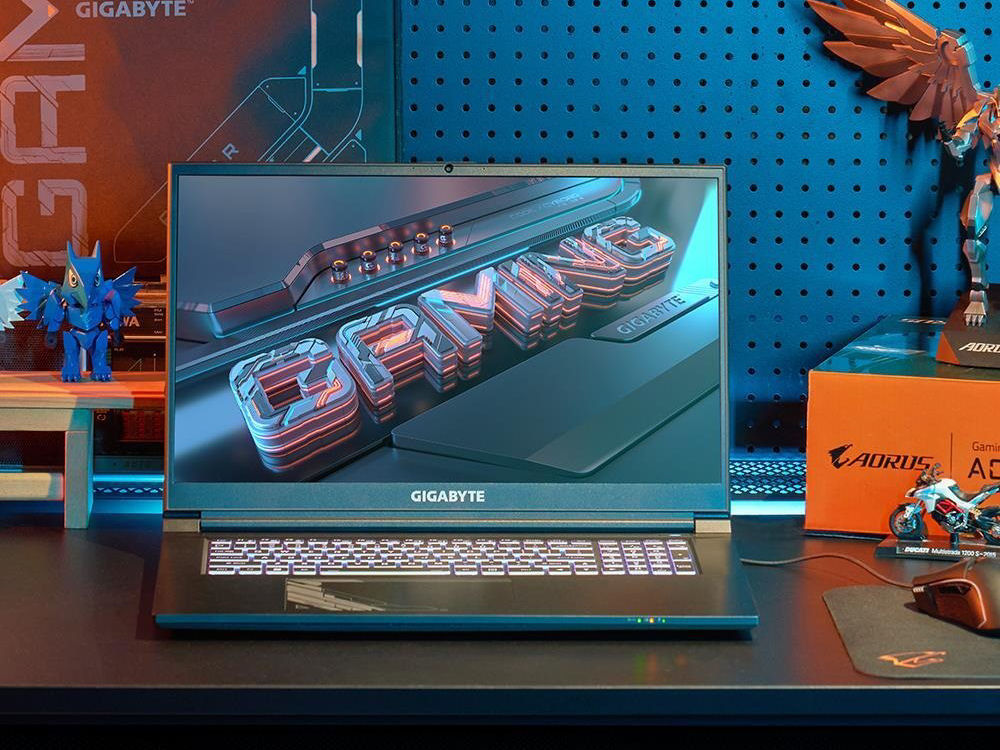
Gigabyte G7 KE in review: Affordable gaming laptop with a powerful RTX 3060

Gigabyte G7 KE in review: Affordable gaming laptop with a powerful RTX 3060
Acer Nitro 5 AN517-55-738R
Samsung PM9A1 MZVL2512HCJQ


4572 (1938.92min – 4572max) MB/s ∼100{b7c9e2c88beb1a84f22d94ab877a147f4adc4b3519717f3f957a0f34e16918d1} +47{b7c9e2c88beb1a84f22d94ab877a147f4adc4b3519717f3f957a0f34e16918d1}

Average Gigabyte AG470S1TB-SI B10
  (3101 – 4117, n=4) Gigabyte G7 KE
Gigabyte AG470S1TB-SI B10


3101 (2775.37min – 3100.52max) MB/s ∼68{b7c9e2c88beb1a84f22d94ab877a147f4adc4b3519717f3f957a0f34e16918d1}

Average of class Gaming
  (834 – 5568, n=178, last 2 years) Lenovo IdeaPad Gaming 3 15IAH7
Intel SSD 660p SSDPEKNW512G8


2168 (2101.77min – 2167.68max) MB/s ∼47{b7c9e2c88beb1a84f22d94ab877a147f4adc4b3519717f3f957a0f34e16918d1} -30{b7c9e2c88beb1a84f22d94ab877a147f4adc4b3519717f3f957a0f34e16918d1}

HP Pavilion Gaming 17-cd2146ng
SK Hynix BC711 512GB HFM512GD3GX013N


2110 (2094.85min – 2110.13max) MB/s ∼46{b7c9e2c88beb1a84f22d94ab877a147f4adc4b3519717f3f957a0f34e16918d1} -32{b7c9e2c88beb1a84f22d94ab877a147f4adc4b3519717f3f957a0f34e16918d1}

Asus TUF Gaming F17 FX707Z-HX011W
SK Hynix HFM001TD3JX013N


1780 (1752.32min – 1780.06max) MB/s ∼39{b7c9e2c88beb1a84f22d94ab877a147f4adc4b3519717f3f957a0f34e16918d1} -43{b7c9e2c88beb1a84f22d94ab877a147f4adc4b3519717f3f957a0f34e16918d1}

Asus TUF Gaming F17 FX707Z-HX011W
SK Hynix HFM001TD3JX013N


1780 (1752.32min – 1780.06max) MB/s ∼39{b7c9e2c88beb1a84f22d94ab877a147f4adc4b3519717f3f957a0f34e16918d1} -43{b7c9e2c88beb1a84f22d94ab877a147f4adc4b3519717f3f957a0f34e16918d1}

Acer Nitro 5 AN517-55-738R
Samsung PM9A1 MZVL2512HCJQ


4434 (4418.88min – 4433.95max) MB/s ∼100{b7c9e2c88beb1a84f22d94ab877a147f4adc4b3519717f3f957a0f34e16918d1} +61{b7c9e2c88beb1a84f22d94ab877a147f4adc4b3519717f3f957a0f34e16918d1}

Average Gigabyte AG470S1TB-SI B10
  (2200 – 4236, n=4) Average of class Gaming
  (399 – 7889, n=177, last 2 years) HP Pavilion Gaming 17-cd2146ng
SK Hynix BC711 512GB HFM512GD3GX013N


2816 (2640.28min – 2815.85max) MB/s ∼64{b7c9e2c88beb1a84f22d94ab877a147f4adc4b3519717f3f957a0f34e16918d1} +2{b7c9e2c88beb1a84f22d94ab877a147f4adc4b3519717f3f957a0f34e16918d1}

Gigabyte G7 KE
Gigabyte AG470S1TB-SI B10


2749 (2612.84min – 2749.11max) MB/s ∼62{b7c9e2c88beb1a84f22d94ab877a147f4adc4b3519717f3f957a0f34e16918d1}

Asus TUF Gaming F17 FX707Z-HX011W
SK Hynix HFM001TD3JX013N


2643 (2559.24min – 2642.87max) MB/s ∼60{b7c9e2c88beb1a84f22d94ab877a147f4adc4b3519717f3f957a0f34e16918d1} -4{b7c9e2c88beb1a84f22d94ab877a147f4adc4b3519717f3f957a0f34e16918d1}

Asus TUF Gaming F17 FX707Z-HX011W
SK Hynix HFM001TD3JX013N


2643 (2559.24min – 2642.87max) MB/s ∼60{b7c9e2c88beb1a84f22d94ab877a147f4adc4b3519717f3f957a0f34e16918d1} -4{b7c9e2c88beb1a84f22d94ab877a147f4adc4b3519717f3f957a0f34e16918d1}

Lenovo IdeaPad Gaming 3 15IAH7
Intel SSD 660p SSDPEKNW512G8


1607 (1584.61min – 1607.26max) MB/s ∼36{b7c9e2c88beb1a84f22d94ab877a147f4adc4b3519717f3f957a0f34e16918d1} -42{b7c9e2c88beb1a84f22d94ab877a147f4adc4b3519717f3f957a0f34e16918d1}

Gigabyte G7 KE
Gigabyte AG470S1TB-SI B10


7032 (6100.58min – 7031.96max) MB/s ∼100{b7c9e2c88beb1a84f22d94ab877a147f4adc4b3519717f3f957a0f34e16918d1}

Average Gigabyte AG470S1TB-SI B10
  (6921 – 7034, n=4) Acer Nitro 5 AN517-55-738R
Samsung PM9A1 MZVL2512HCJQ


6792 (6372.24min – 6792.05max) MB/s ∼97{b7c9e2c88beb1a84f22d94ab877a147f4adc4b3519717f3f957a0f34e16918d1} -3{b7c9e2c88beb1a84f22d94ab877a147f4adc4b3519717f3f957a0f34e16918d1}

Average of class Gaming
  (1620 – 13195, n=178, last 2 years) HP Pavilion Gaming 17-cd2146ng
SK Hynix BC711 512GB HFM512GD3GX013N


3556 (3378.88min – 3555.93max) MB/s ∼51{b7c9e2c88beb1a84f22d94ab877a147f4adc4b3519717f3f957a0f34e16918d1} -49{b7c9e2c88beb1a84f22d94ab877a147f4adc4b3519717f3f957a0f34e16918d1}

Asus TUF Gaming F17 FX707Z-HX011W
SK Hynix HFM001TD3JX013N


3515 (2963.07min – 3514.83max) MB/s ∼50{b7c9e2c88beb1a84f22d94ab877a147f4adc4b3519717f3f957a0f34e16918d1} -50{b7c9e2c88beb1a84f22d94ab877a147f4adc4b3519717f3f957a0f34e16918d1}

Asus TUF Gaming F17 FX707Z-HX011W
SK Hynix HFM001TD3JX013N


3515 (2963.07min – 3514.83max) MB/s ∼50{b7c9e2c88beb1a84f22d94ab877a147f4adc4b3519717f3f957a0f34e16918d1} -50{b7c9e2c88beb1a84f22d94ab877a147f4adc4b3519717f3f957a0f34e16918d1}

Lenovo IdeaPad Gaming 3 15IAH7
Intel SSD 660p SSDPEKNW512G8


2660 (2328.47min – 2659.74max) MB/s ∼38{b7c9e2c88beb1a84f22d94ab877a147f4adc4b3519717f3f957a0f34e16918d1} -62{b7c9e2c88beb1a84f22d94ab877a147f4adc4b3519717f3f957a0f34e16918d1}

Acer Nitro 5 AN517-55-738R
Samsung PM9A1 MZVL2512HCJQ


5091 (5070.42min – 5091.14max) MB/s ∼100{b7c9e2c88beb1a84f22d94ab877a147f4adc4b3519717f3f957a0f34e16918d1} +41{b7c9e2c88beb1a84f22d94ab877a147f4adc4b3519717f3f957a0f34e16918d1}

Average Gigabyte AG470S1TB-SI B10
  (3611 – 4852, n=4) Average of class Gaming
  (86.2 – 10261, n=178, last 2 years) Gigabyte G7 KE
Gigabyte AG470S1TB-SI B10


3613 (3580.5min – 3612.97max) MB/s ∼71{b7c9e2c88beb1a84f22d94ab877a147f4adc4b3519717f3f957a0f34e16918d1}

Asus TUF Gaming F17 FX707Z-HX011W
SK Hynix HFM001TD3JX013N


3012 (2669.05min – 3012.29max) MB/s ∼59{b7c9e2c88beb1a84f22d94ab877a147f4adc4b3519717f3f957a0f34e16918d1} -17{b7c9e2c88beb1a84f22d94ab877a147f4adc4b3519717f3f957a0f34e16918d1}

Asus TUF Gaming F17 FX707Z-HX011W
SK Hynix HFM001TD3JX013N


3012 (2669.05min – 3012.29max) MB/s ∼59{b7c9e2c88beb1a84f22d94ab877a147f4adc4b3519717f3f957a0f34e16918d1} -17{b7c9e2c88beb1a84f22d94ab877a147f4adc4b3519717f3f957a0f34e16918d1}

HP Pavilion Gaming 17-cd2146ng
SK Hynix BC711 512GB HFM512GD3GX013N


2914 (2673.66min – 2913.62max) MB/s ∼57{b7c9e2c88beb1a84f22d94ab877a147f4adc4b3519717f3f957a0f34e16918d1} -19{b7c9e2c88beb1a84f22d94ab877a147f4adc4b3519717f3f957a0f34e16918d1}

Lenovo IdeaPad Gaming 3 15IAH7
Intel SSD 660p SSDPEKNW512G8


1671 (1644.73min – 1670.81max) MB/s ∼33{b7c9e2c88beb1a84f22d94ab877a147f4adc4b3519717f3f957a0f34e16918d1} -54{b7c9e2c88beb1a84f22d94ab877a147f4adc4b3519717f3f957a0f34e16918d1}

Acer Nitro 5 AN517-55-738R
Samsung PM9A1 MZVL2512HCJQ


90.4 (89.34min – 90.39max) MB/s ∼100{b7c9e2c88beb1a84f22d94ab877a147f4adc4b3519717f3f957a0f34e16918d1} +18{b7c9e2c88beb1a84f22d94ab877a147f4adc4b3519717f3f957a0f34e16918d1}

Average Gigabyte AG470S1TB-SI B10
  (74.1 – 88.8, n=4) Gigabyte G7 KE
Gigabyte AG470S1TB-SI B10


76.7 (73.36min – 76.74max) MB/s ∼85{b7c9e2c88beb1a84f22d94ab877a147f4adc4b3519717f3f957a0f34e16918d1}

Lenovo IdeaPad Gaming 3 15IAH7
Intel SSD 660p SSDPEKNW512G8


72.3 (71.34min – 72.26max) MB/s ∼80{b7c9e2c88beb1a84f22d94ab877a147f4adc4b3519717f3f957a0f34e16918d1} -6{b7c9e2c88beb1a84f22d94ab877a147f4adc4b3519717f3f957a0f34e16918d1}

HP Pavilion Gaming 17-cd2146ng
SK Hynix BC711 512GB HFM512GD3GX013N


68.3 (67.74min – 68.3max) MB/s ∼76{b7c9e2c88beb1a84f22d94ab877a147f4adc4b3519717f3f957a0f34e16918d1} -11{b7c9e2c88beb1a84f22d94ab877a147f4adc4b3519717f3f957a0f34e16918d1}

Average of class Gaming
  (23.3 – 97.4, n=178, last 2 years) Asus TUF Gaming F17 FX707Z-HX011W
SK Hynix HFM001TD3JX013N


32.6 (30.94min – 32.64max) MB/s ∼36{b7c9e2c88beb1a84f22d94ab877a147f4adc4b3519717f3f957a0f34e16918d1} -57{b7c9e2c88beb1a84f22d94ab877a147f4adc4b3519717f3f957a0f34e16918d1}

Asus TUF Gaming F17 FX707Z-HX011W
SK Hynix HFM001TD3JX013N


32.6 (30.94min – 32.64max) MB/s ∼36{b7c9e2c88beb1a84f22d94ab877a147f4adc4b3519717f3f957a0f34e16918d1} -57{b7c9e2c88beb1a84f22d94ab877a147f4adc4b3519717f3f957a0f34e16918d1}

Gigabyte G7 KE
Gigabyte AG470S1TB-SI B10


391 (373.18min – 391.21max) MB/s ∼100{b7c9e2c88beb1a84f22d94ab877a147f4adc4b3519717f3f957a0f34e16918d1}

Average Gigabyte AG470S1TB-SI B10
  (319 – 391, n=4) Acer Nitro 5 AN517-55-738R
Samsung PM9A1 MZVL2512HCJQ


236 (235.61min – 236.11max) MB/s ∼60{b7c9e2c88beb1a84f22d94ab877a147f4adc4b3519717f3f957a0f34e16918d1} -40{b7c9e2c88beb1a84f22d94ab877a147f4adc4b3519717f3f957a0f34e16918d1}

Asus TUF Gaming F17 FX707Z-HX011W
SK Hynix HFM001TD3JX013N


216 (185.22min – 215.93max) MB/s ∼55{b7c9e2c88beb1a84f22d94ab877a147f4adc4b3519717f3f957a0f34e16918d1} -45{b7c9e2c88beb1a84f22d94ab877a147f4adc4b3519717f3f957a0f34e16918d1}

Asus TUF Gaming F17 FX707Z-HX011W
SK Hynix HFM001TD3JX013N


216 (185.22min – 215.93max) MB/s ∼55{b7c9e2c88beb1a84f22d94ab877a147f4adc4b3519717f3f957a0f34e16918d1} -45{b7c9e2c88beb1a84f22d94ab877a147f4adc4b3519717f3f957a0f34e16918d1}

Average of class Gaming
  (66.6 – 421, n=177, last 2 years) Lenovo IdeaPad Gaming 3 15IAH7
Intel SSD 660p SSDPEKNW512G8


194.3 (188.32min – 194.33max) MB/s ∼50{b7c9e2c88beb1a84f22d94ab877a147f4adc4b3519717f3f957a0f34e16918d1} -50{b7c9e2c88beb1a84f22d94ab877a147f4adc4b3519717f3f957a0f34e16918d1}

HP Pavilion Gaming 17-cd2146ng
SK Hynix BC711 512GB HFM512GD3GX013N


189.2 (186.1min – 189.17max) MB/s ∼48{b7c9e2c88beb1a84f22d94ab877a147f4adc4b3519717f3f957a0f34e16918d1} -52{b7c9e2c88beb1a84f22d94ab877a147f4adc4b3519717f3f957a0f34e16918d1}

Average Gigabyte AG470S1TB-SI B10
  (3551 – 3582, n=4) Gigabyte G7 KE
Gigabyte AG470S1TB-SI B10


3551 (3544.16min – 3551.38max) MB/s ∼100{b7c9e2c88beb1a84f22d94ab877a147f4adc4b3519717f3f957a0f34e16918d1}

Acer Nitro 5 AN517-55-738R
Samsung PM9A1 MZVL2512HCJQ


2780 (2665.55min – 2779.85max) MB/s ∼78{b7c9e2c88beb1a84f22d94ab877a147f4adc4b3519717f3f957a0f34e16918d1} -22{b7c9e2c88beb1a84f22d94ab877a147f4adc4b3519717f3f957a0f34e16918d1}

Average of class Gaming
  (310 – 4483, n=177, last 2 years) Asus TUF Gaming F17 FX707Z-HX011W
SK Hynix HFM001TD3JX013N


2214 (2192.88min – 2214.37max) MB/s ∼62{b7c9e2c88beb1a84f22d94ab877a147f4adc4b3519717f3f957a0f34e16918d1} -38{b7c9e2c88beb1a84f22d94ab877a147f4adc4b3519717f3f957a0f34e16918d1}

Asus TUF Gaming F17 FX707Z-HX011W
SK Hynix HFM001TD3JX013N


2214 (2192.88min – 2214.37max) MB/s ∼62{b7c9e2c88beb1a84f22d94ab877a147f4adc4b3519717f3f957a0f34e16918d1} -38{b7c9e2c88beb1a84f22d94ab877a147f4adc4b3519717f3f957a0f34e16918d1}

HP Pavilion Gaming 17-cd2146ng
SK Hynix BC711 512GB HFM512GD3GX013N


2182 (2150.23min – 2182.03max) MB/s ∼61{b7c9e2c88beb1a84f22d94ab877a147f4adc4b3519717f3f957a0f34e16918d1} -39{b7c9e2c88beb1a84f22d94ab877a147f4adc4b3519717f3f957a0f34e16918d1}

Lenovo IdeaPad Gaming 3 15IAH7
Intel SSD 660p SSDPEKNW512G8


474 (463.36min – 474.33max) MB/s ∼13{b7c9e2c88beb1a84f22d94ab877a147f4adc4b3519717f3f957a0f34e16918d1} -87{b7c9e2c88beb1a84f22d94ab877a147f4adc4b3519717f3f957a0f34e16918d1}

Average Gigabyte AG470S1TB-SI B10
  (3570 – 3604, n=4) Gigabyte G7 KE
Gigabyte AG470S1TB-SI B10


3576 (3480.8min – 3575.55max) MB/s ∼100{b7c9e2c88beb1a84f22d94ab877a147f4adc4b3519717f3f957a0f34e16918d1}

Asus TUF Gaming F17 FX707Z-HX011W
SK Hynix HFM001TD3JX013N


2307 (2258.85min – 2307.29max) MB/s ∼64{b7c9e2c88beb1a84f22d94ab877a147f4adc4b3519717f3f957a0f34e16918d1} -35{b7c9e2c88beb1a84f22d94ab877a147f4adc4b3519717f3f957a0f34e16918d1}

Asus TUF Gaming F17 FX707Z-HX011W
SK Hynix HFM001TD3JX013N


2307 (2258.85min – 2307.29max) MB/s ∼64{b7c9e2c88beb1a84f22d94ab877a147f4adc4b3519717f3f957a0f34e16918d1} -35{b7c9e2c88beb1a84f22d94ab877a147f4adc4b3519717f3f957a0f34e16918d1}

Acer Nitro 5 AN517-55-738R
Samsung PM9A1 MZVL2512HCJQ


2249 (2140.07min – 2249.23max) MB/s ∼63{b7c9e2c88beb1a84f22d94ab877a147f4adc4b3519717f3f957a0f34e16918d1} -37{b7c9e2c88beb1a84f22d94ab877a147f4adc4b3519717f3f957a0f34e16918d1}

Average of class Gaming
  (288 – 4383, n=177, last 2 years) HP Pavilion Gaming 17-cd2146ng
SK Hynix BC711 512GB HFM512GD3GX013N


1620 (1542.86min – 1619.93max) MB/s ∼45{b7c9e2c88beb1a84f22d94ab877a147f4adc4b3519717f3f957a0f34e16918d1} -55{b7c9e2c88beb1a84f22d94ab877a147f4adc4b3519717f3f957a0f34e16918d1}

Lenovo IdeaPad Gaming 3 15IAH7
Intel SSD 660p SSDPEKNW512G8


609 (579.43min – 608.79max) MB/s ∼17{b7c9e2c88beb1a84f22d94ab877a147f4adc4b3519717f3f957a0f34e16918d1} -83{b7c9e2c88beb1a84f22d94ab877a147f4adc4b3519717f3f957a0f34e16918d1}

Average Gigabyte AG470S1TB-SI B10
  (8837 – 9279, n=4) Gigabyte G7 KE
Gigabyte AG470S1TB-SI B10 Average of class Gaming
  (910 – 9510, n=169, last 2 years) Asus TUF Gaming F17 FX707Z-HX011W
SK Hynix HFM001TD3JX013N HP Pavilion Gaming 17-cd2146ng
SK Hynix BC711 512GB HFM512GD3GX013N Acer Nitro 5 AN517-55-738R
Samsung PM9A1 MZVL2512HCJQ Lenovo IdeaPad Gaming 3 15IAH7
Intel SSD 660p SSDPEKNW512G8 Average Gigabyte AG470S1TB-SI B10
  (3468 – 3629, n=4) Gigabyte G7 KE
Gigabyte AG470S1TB-SI B10 Average of class Gaming
  (389 – 3629, n=169, last 2 years) HP Pavilion Gaming 17-cd2146ng
SK Hynix BC711 512GB HFM512GD3GX013N Acer Nitro 5 AN517-55-738R
Samsung PM9A1 MZVL2512HCJQ Asus TUF Gaming F17 FX707Z-HX011W
SK Hynix HFM001TD3JX013N Lenovo IdeaPad Gaming 3 15IAH7
Intel SSD 660p SSDPEKNW512G8 Average Gigabyte AG470S1TB-SI B10
  (3621 – 3996, n=4) Gigabyte G7 KE
Gigabyte AG470S1TB-SI B10 Average of class Gaming
  (338 – 4522, n=169, last 2 years) Asus TUF Gaming F17 FX707Z-HX011W
SK Hynix HFM001TD3JX013N HP Pavilion Gaming 17-cd2146ng
SK Hynix BC711 512GB HFM512GD3GX013N Lenovo IdeaPad Gaming 3 15IAH7
Intel SSD 660p SSDPEKNW512G8 Acer Nitro 5 AN517-55-738R
Samsung PM9A1 MZVL2512HCJQ Acer Nitro 5 AN517-55-738R
Samsung PM9A1 MZVL2512HCJQ Average Gigabyte AG470S1TB-SI B10
  (4541 – 5715, n=4) Gigabyte G7 KE
Gigabyte AG470S1TB-SI B10 Average of class Gaming
  (925 – 9971, n=169, last 2 years) HP Pavilion Gaming 17-cd2146ng
SK Hynix BC711 512GB HFM512GD3GX013N Asus TUF Gaming F17 FX707Z-HX011W
SK Hynix HFM001TD3JX013N Lenovo IdeaPad Gaming 3 15IAH7
Intel SSD 660p SSDPEKNW512G8 Gigabyte G7 KE
Gigabyte AG470S1TB-SI B10 Average Gigabyte AG470S1TB-SI B10
  (3162 – 3806, n=4) Average of class Gaming
  (308 – 8590, n=169, last 2 years) HP Pavilion Gaming 17-cd2146ng
SK Hynix BC711 512GB HFM512GD3GX013N Asus TUF Gaming F17 FX707Z-HX011W
SK Hynix HFM001TD3JX013N Acer Nitro 5 AN517-55-738R
Samsung PM9A1 MZVL2512HCJQ Lenovo IdeaPad Gaming 3 15IAH7
Intel SSD 660p SSDPEKNW512G8 Average Gigabyte AG470S1TB-SI B10
  (94 – 108, n=4) Gigabyte G7 KE
Gigabyte AG470S1TB-SI B10 Lenovo IdeaPad Gaming 3 15IAH7
Intel SSD 660p SSDPEKNW512G8 HP Pavilion Gaming 17-cd2146ng
SK Hynix BC711 512GB HFM512GD3GX013N Average of class Gaming
  (20 – 108, n=169, last 2 years) Acer Nitro 5 AN517-55-738R
Samsung PM9A1 MZVL2512HCJQ Asus TUF Gaming F17 FX707Z-HX011W
SK Hynix HFM001TD3JX013N Gigabyte G7 KE
Gigabyte AG470S1TB-SI B10 Average Gigabyte AG470S1TB-SI B10
  (256 – 325, n=4) Lenovo IdeaPad Gaming 3 15IAH7
Intel SSD 660p SSDPEKNW512G8 Acer Nitro 5 AN517-55-738R
Samsung PM9A1 MZVL2512HCJQ HP Pavilion Gaming 17-cd2146ng
SK Hynix BC711 512GB HFM512GD3GX013N Average of class Gaming
  (18 – 364, n=169, last 2 years) Asus TUF Gaming F17 FX707Z-HX011W
SK Hynix HFM001TD3JX013N Average Gigabyte AG470S1TB-SI B10
  (2909 – 2963, n=4) Gigabyte G7 KE
Gigabyte AG470S1TB-SI B10 HP Pavilion Gaming 17-cd2146ng
SK Hynix BC711 512GB HFM512GD3GX013N Asus TUF Gaming F17 FX707Z-HX011W
SK Hynix HFM001TD3JX013N Average of class Gaming
  (216 – 2963, n=169, last 2 years) Acer Nitro 5 AN517-55-738R
Samsung PM9A1 MZVL2512HCJQ Lenovo IdeaPad Gaming 3 15IAH7
Intel SSD 660p SSDPEKNW512G8 Average Gigabyte AG470S1TB-SI B10
  (2915 – 3371, n=4) Gigabyte G7 KE
Gigabyte AG470S1TB-SI B10 Average of class Gaming
  (243 – 4008, n=169, last 2 years) Asus TUF Gaming F17 FX707Z-HX011W
SK Hynix HFM001TD3JX013N HP Pavilion Gaming 17-cd2146ng
SK Hynix BC711 512GB HFM512GD3GX013N Lenovo IdeaPad Gaming 3 15IAH7
Intel SSD 660p SSDPEKNW512G8 Acer Nitro 5 AN517-55-738R
Samsung PM9A1 MZVL2512HCJQ Gigabyte G7 KE
Gigabyte AG470S1TB-SI B10 Asus TUF Gaming F17 FX707Z-HX011W
SK Hynix HFM001TD3JX013N Lenovo IdeaPad Gaming 3 15IAH7
Intel SSD 660p SSDPEKNW512G8 Average Gigabyte AG470S1TB-SI B10
  (0.048 – 0.094, n=4) Average of class Gaming
  (0.022 – 0.23, n=164, last 2 years) Acer Nitro 5 AN517-55-738R
Samsung PM9A1 MZVL2512HCJQ HP Pavilion Gaming 17-cd2146ng
SK Hynix BC711 512GB HFM512GD3GX013N Average of class Gaming
  (0.012 – 0.425, n=169, last 2 years)


0.05922 ms * ∼100{b7c9e2c88beb1a84f22d94ab877a147f4adc4b3519717f3f957a0f34e16918d1} -394{b7c9e2c88beb1a84f22d94ab877a147f4adc4b3519717f3f957a0f34e16918d1}

Asus TUF Gaming F17 FX707Z-HX011W
SK Hynix HFM001TD3JX013N Lenovo IdeaPad Gaming 3 15IAH7
Intel SSD 660p SSDPEKNW512G8 HP Pavilion Gaming 17-cd2146ng
SK Hynix BC711 512GB HFM512GD3GX013N Acer Nitro 5 AN517-55-738R
Samsung PM9A1 MZVL2512HCJQ Average Gigabyte AG470S1TB-SI B10
  (0.012 – 0.014, n=4) Gigabyte G7 KE
Gigabyte AG470S1TB-SI B10

* … smaller is better

Brockhampton: The Family/TM albums review – plenty to unpick in the first, but better flows in the second

Brockhampton: The Family/TM albums review – plenty to unpick in the first, but better flows in the second
B

rockhampton under no circumstances played by the policies, so it’s easy to understand that the Texan hip hop collective’s farewell should really be as messy and bewildering as their all also quick existence. They proudly named on their own a “boy band” and included a net designer, a photographer, an Irishman, and most extraordinarily for American rap, an out homosexual man amongst their 13 whole-time associates. Between 2017 and 2019 they unveiled five albums, setting out their stall as America’s quickest-going, most exciting new group.

But herding that many folks towards a singular creative vision would seem to have been much too a great deal for lead member Kevin Abstract. The band introduced an indefinite hiatus in January, performed a final competition set at Coachella in April, and set a date for a farewell album, The Family members (★★★), for previous weekend.

As ever, matters turned extra intricate than that. There was one a lot more gig previous Saturday in Los Angeles, this week there have been 3 dwell radio displays titled I Pass up the Band By now, and the working day after The Spouse and children they released a ultimate-ultimate album, referred to as TM (★★★★). The latter is the position to go to hear the complete collective trading verses. Summary, Matt Champion, Merlyn Wooden and Dom McLennon all acquire a thrilling spin close to the jerky guitar and alien synths of New Shoes. There is extra singing here and a more peaceful come to feel, even when the beats get off on the romantic R&B of Guy on the Moon. The piano chords get looser and looser until a excellent climax on Crucify Me.

Brockhampton

The Spouse and children, nonetheless, is the area to go for the total Brockhampton tale, albeit from one particular man’s standpoint. Abstract’s is pretty a lot the only voice on the report, environment himself up currently for the highest profile solo profession. The melodic pop of All That appears fondly at the group’s early days before taking a horrible change in the next verse: “Too a lot trauma for me to be at my highest/I skipped Ameer so me and Dom saved battling,” he raps, referring to Ameer Vann’s departure from the band pursuing sexual abuse allegations (which he denied).

Over the Seventies soul of the title keep track of he seems disappointed with his bandmates and reminds himself: “Kevin don’t forget about you are by itself.” However, by the time we get to a remaining track, merely titled Brockhampton, he has encouraging things to say to all of them. There’s a lot of intrigue in this article for gossipy supporters to dissect, but for people who simply just want to listen to a terrific group in great movement, TM is the better bet.

Dilemma Almost everything/RCA

Origin EVO17-S (2022) review: this gaming laptop is a great choice for creatives

Origin EVO17-S (2022) review: this gaming laptop is a great choice for creatives

Gaming laptops aren’t just for gamers! Their powerful processors and graphics cards, along with their large screens, also make them a good choice for anyone using creative software, for tasks like image and video editing, graphic design work, film-making animation and 3D modelling. Yes, they tend to be expensive, but if you can get your work done faster, then surely you’re going to save cash overall. As they say, time is money…

Origin has a great reputation, both for the quality of its hardware and the high standards of its customer service. The specs for this laptop compare favourably against some of the best gaming laptops (opens in new tab) as well as the best laptops for CAD (opens in new tab), so I was keen to get my hands on the latest iteration of its flagship gaming laptop, the Origin EVO17-S (2022), and put it through its paces. Read on to find out what I thought of it, and whether I’d recommend it to both gamers and users of creative software.

Origin EVO17-S (2022) review: Pricing

Origin EVO16-S (2022) gaming laptop review

Origin EVO16-S (2022) gaming laptop review

Origin EVO16-S specs

Screen size: 16.1-inch
Resolution: 1920 x 1080
Refresh rate: 144Hz
CPU: AMD Ryzen 7 6800H
GPU: Radeon RX 6650 M XT
Memory: 32GB DDR5
Storage: 1TB NVMe SSD
I/O: 1x 3.5mm audio jack, 1x 3.5 microphone jack, 1x RJ45 LAN port, 1x HDMI 2.1, 2x USB 3.2 Type-A, 2x USB 3.2 Type-C
Battery: 80W
Weight: 5lbs
Price: $1,799

Origin’s latest slim EVO16-S gaming laptop squeezes itself in between other heavy hitters in the same price range. It’s a little more expensive than laptops like the Acer Predator Helios 300 (opens in new tab) and the Lenovo Legion 5 Pro (opens in new tab), and it doesn’t perform significantly better than them. But the differences are minimal and for a 1080p laptop with an AMD Radeon RX 6650M XT, the EVO16-S offers a sweet spot if your gaming habits don’t require a higher resolution and refresh rate.

Although the 6650M XT and the Ryzen 7 6800H keep the EVO16-S fed when it comes to gaming performance, its 1080p 144Hz screen doesn’t have a tremendous appetite. If this laptop were equipped with a 1440p panel or touted a 165Hz or 240Hz refresh rate, the graphs below would tell a different story. The EVO16-S isn’t strapped with anything absurd or overkill; it’s a gaming laptop for someone that isn’t quite sure what they want.

ASUS ROG Strix Scar 17 SE review: The best gaming laptop to buy this year

ASUS ROG Strix Scar 17 SE review: The best gaming laptop to buy this year